Getting Around Hobart without a Car
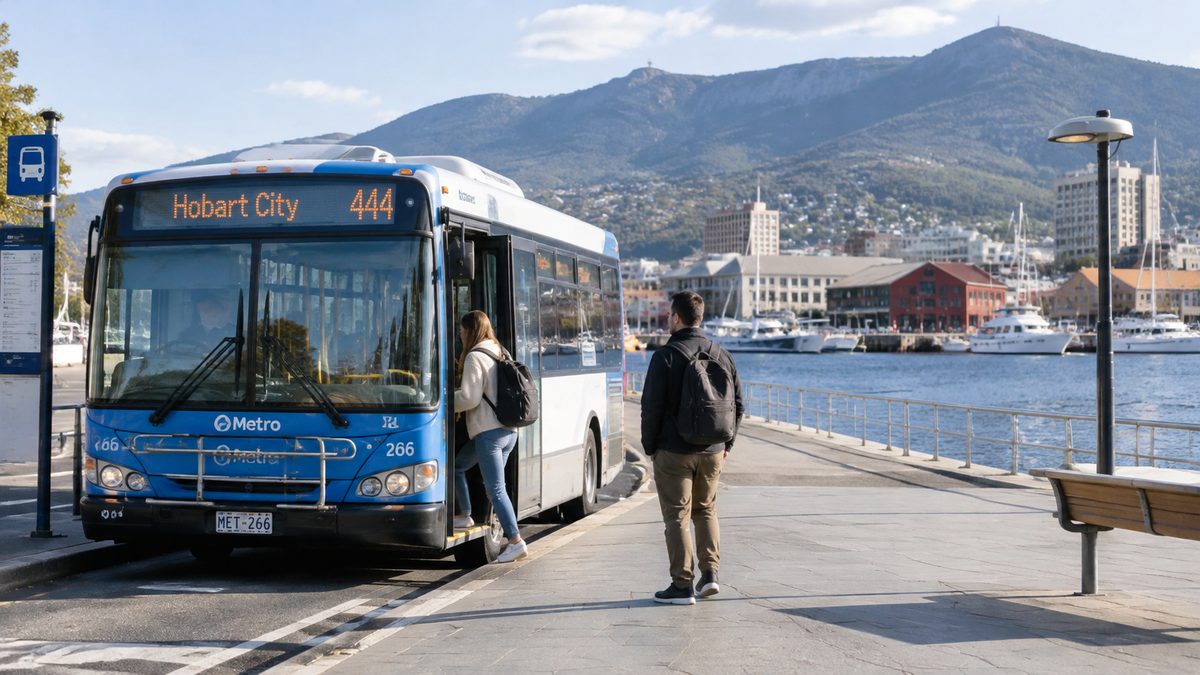
Getting around Hobart without a car is easy in the city centre, but regional trips need advance planning. Central Hobart is small enough to explore on foot. Metro Tasmania buses connect the centre with many suburbs, while private coaches and organised tours cover selected places beyond the urban area. The main limits are steep streets, less frequent evening services and poor links between regional attractions.
Your best plan is to walk within central Hobart, use buses for suburban trips and book dedicated transport for distant sights. This keeps costs down without turning each day into a transport puzzle.
How much of central Hobart can you explore on foot?
Most central sights sit within a walkable area stretching from the waterfront to the central business district, Salamanca Place and lower Battery Point. Hobart is a Compact city by Australian standards. A visitor staying near the waterfront can reach many museums, restaurants, markets and historic streets without using a vehicle.
The walk between the city centre and Salamanca Place is short and mostly level. Battery Point rises behind Salamanca, so the distance is modest but the climb can feel sharp. Kelly's Steps provide a direct link between the two areas, though people using wheelchairs, prams or heavy luggage should take the gentler street route.
Walking also removes the need to find parking in busy areas. That matters around Salamanca Market, major events and cruise ship visits. Crowds can slow buses and cars, while pedestrians can usually move through the precinct with less delay.
The city grid becomes steeper west of the centre. A place that looks close on a map may involve a sustained climb. Check elevation as well as distance before choosing accommodation. A room several blocks uphill can add effort to every trip, especially when carrying shopping or returning after dinner.
When should you use Hobart's bus network?
Use Public transport when your destination lies outside the central walking zone or when a steep climb would take too much time. Metro Tasmania runs the main urban bus network. Services leave from city stops and travel to suburbs on both sides of the River Derwent.
Buses are useful for trips towards Sandy Bay, Tasmania, the University of Tasmania area, North Hobart and the northern suburbs. They also provide access to Glenorchy, Tasmania, which has shops, services and connections farther north. Mount Nelson, Tasmania can be reached by bus, but its hillside streets and service pattern make timetable checks essential.
Do not assume that every route runs often at night or on Sundays. Frequencies vary by route and time. Check the official journey planner on the day of travel, then note the final practical return service. A listed late bus may leave you with a long wait if you miss the earlier one.
Allow spare time when changing buses. Many suburban journeys pass through central Hobart rather than running directly across the city. A trip between two nearby-looking suburbs may require a transfer in the centre.
How should you pay and board?
Check current fare and payment details with Metro Tasmania before travelling, since ticket products and accepted payment methods can change. Have your payment ready before the bus arrives. Signal clearly at the stop, board through the front door and tell the driver if you are unsure where to leave.
Live map apps can help, but they may place a stop on the wrong side of a divided road or miss a temporary change. Match the route number and direction shown at the physical stop. Save a screenshot of the return timetable in case mobile reception or battery power fails.
Can buses handle an entire Hobart holiday?
Buses can cover a city-based visit, but they work best when each day stays within one transport corridor. A morning in Sandy Bay followed by an afternoon in Glenorchy may involve returning through the centre. That is possible, though it can consume more time than the sights themselves.
A better car-free plan groups places by area. Spend one day walking around the centre, Salamanca and Battery Point. Use another day for North Hobart or the northern suburbs. Reserve a separate day for a mountain shuttle, regional coach or guided tour.
This is where many car-free itineraries fail. They count kilometres but ignore service gaps. Three attractions may sit within a small area yet have no direct bus between them. Build each day around the actual route, not a map pin.
What is the easiest way to travel from Hobart Airport?
The airport sits outside the city and does not have the same urban bus coverage as central Hobart. A dedicated airport bus is usually the clearest car-free choice for one person or a couple staying near its city stops. A taxi or booked ride may cost more but can make sense for a group, late arrival or accommodation uphill from the drop-off point.
Check where the airport service stops before booking your room. A hotel described as central may still require a steep walk with luggage. If your flight arrives late, confirm the final service rather than assuming transport will continue after every scheduled landing.
For the return trip, leave a time buffer. Peak traffic, road works and boarding delays can affect the journey. The cost of an earlier departure is small compared with the cost of a missed flight.
Is cycling a practical way to get around?
Cycling works well for selected routes, but Hobart's hills and uneven Cycling infrastructure make it a poor universal answer. The waterfront and some routes north of the centre suit casual riders. Other streets have fast traffic, narrow lanes or steep grades that demand confidence.
An electric bike reduces the strain of climbing and can make suburban trips realistic. It does not solve road design, weather or secure parking. Ask the hire company for a route suited to your skill level, and request a lock, helmet, lights and a clear plan for charging.
Wind can change the effort needed for exposed waterfront rides. Hobart weather can also shift quickly. Carry a light waterproof layer even when the morning looks clear. Avoid building a fixed schedule around a long ride unless you have another way back.
Readers familiar with Nelson, New Zealand may expect a similar small-city cycling experience. The two cities differ in street layout, gradients and network coverage. Treat Hobart's conditions as local rather than assuming that a bike-friendly trip elsewhere will translate directly.
Can you cross the River Derwent without driving?
Some ferry services provide another way to cross the river, but they do not form a complete replacement for the bus network. Routes, operating days and booking rules can change, and some services focus on commuters or visitors rather than all-day travel.
A ferry trip can be useful when its timetable matches your destination. It can also offer a clear view of Hobart's setting around the river. Check the departure wharf and return time before leaving, since the last sailing may be earlier than expected.
Do not plan a chain of tight ferry and bus connections. Weather or operational changes can break the sequence. Keep enough time to use a bus or taxi if the water crossing does not run.
How can you reach kunanyi/Mount Wellington?
The summit of kunanyi/Mount Wellington is difficult to reach through ordinary urban buses. Metro services can help with some lower foothill areas, but they do not provide a simple city-to-summit trip. A dedicated mountain shuttle or guided tour is the practical car-free option.
Book ahead during busy periods. Confirm whether the service allows time for short walks, where it collects passengers and what happens if summit access closes. Snow, ice, strong wind and fire conditions can affect the mountain road even when central Hobart feels calm.
Dress for the summit rather than the city. The temperature and wind can be far harsher at elevation. Carry warm layers and water, and choose a lower-level walk if conditions make the summit unsafe.
Which regional day trips work without a car?
The strongest car-free regional trips have direct visitor transport from Hobart. Port Arthur, Tasmania is a good example because organised day tours commonly combine transport with time at the historic site. Compare the hours available on site, included entry, meal stops and pickup location. A low advertised price may allow too little time for the place itself.
Bruny Island needs more care. The vehicle ferry leaves from Kettering, and reaching the island does not solve transport between its scattered sights. A guided tour from Hobart is far easier than trying to combine local buses, the ferry and walking. Independent cycling is possible for experienced riders, but distances, hills, traffic and changing weather make it a serious outing.
The Huon Valley also looks close on a map, yet its towns, food producers and natural sights are spread out. Limited services may reach some settlements, but they rarely support a full sightseeing circuit. Choose a tour, arrange a private transfer or focus on one town with a confirmed return service.
The same rule applies to wildlife parks, trailheads and rural food stops. Public transport may pass near the area without stopping at the entrance. A final road section can be unsafe to walk because it lacks a footpath or carries fast traffic.
When is a tour better than public transport?
A tour is better when the destination has no direct service, several widely spaced stops or a strict final connection. It is also useful when entry times must be coordinated with travel. The higher price buys certainty and saves hours that might otherwise be spent waiting beside a rural road.
Read the itinerary closely. Some tours spend much of the day collecting passengers or adding short commercial stops. Look for clear pickup details, realistic time at the main destination and a cancellation policy that covers severe weather or road closure.
Private transport can become competitive for a group. Compare the total price rather than the fare per person. A taxi or hired driver may also suit travellers with limited mobility, bulky equipment or an early departure that falls outside scheduled services.
Where should a car-free visitor stay?
Stay within easy walking distance of the city centre, waterfront or a useful bus corridor. The lowest room price may create extra transport costs if the property sits uphill or far from evening services.
Check four things on a map before booking: the nearest useful bus stop, the walking gradient, the distance to food shops and the route home after dark. Street lighting and footpaths matter more than a straight-line distance.
Accommodation near central Hobart gives the widest choice of tours and airport transfers. Many operators collect from central points rather than every suburb. Staying close to those pickup zones can remove an early taxi fare.
Battery Point offers charm and quick access to Salamanca, though some streets are steep and historic surfaces can be uneven. Sandy Bay can suit longer stays near shops and buses, but its usefulness depends on the exact address. A listing's suburb name alone does not prove that it sits near frequent transport.
How should you plan each day?
Start with the least flexible connection. That may be a tour departure, airport bus, ferry or final regional coach. Add walking and frequent city buses around that fixed time.
Keep a backup for every trip outside central Hobart. Record a taxi number, save the pickup address and know the cost range before leaving. Mobile coverage is usually reliable in the city but can weaken in rural or mountain areas.
Carry water, sun protection and a rain layer. Hobart's conditions can change within one day, and waiting at an exposed stop feels longer without basic protection. Wear shoes suited to hills and mixed surfaces.
The Hobart Field Guide recommends checking official operator information rather than relying on an old blog timetable. Routes, fares and seasonal services change. A useful article can explain the transport pattern, but the operator controls the service that runs today.
What should you do before you arrive?
- Choose a central base. Check walking gradients and the route from your airport drop-off point.
- Group city sights by area. Walk around the centre, Salamanca Place and Battery Point on the same day.
- Check Metro Tasmania routes. Save the outward and final return services for suburban trips.
- Book regional transport early. Use dedicated tours or shuttles for kunanyi/Mount Wellington, Port Arthur, Tasmania and Bruny Island.
- Keep one flexible day. Move a mountain, ferry or cycling plan if weather makes it unsafe or unpleasant.
Base yourself in central Hobart, walk the compact core and pre-book transport for every destination beyond the urban bus network.