Hobart Public Transport Guide
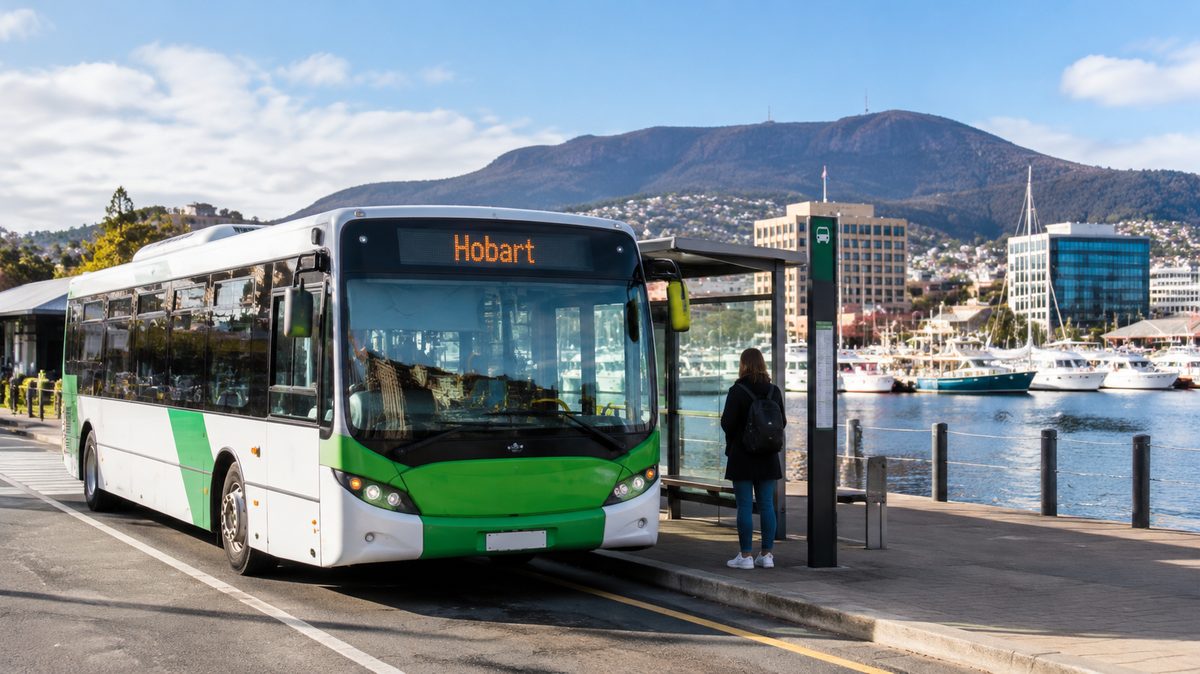
Hobart’s public transport system is bus-based, so most trips begin with finding the right Metro route, stop and departure time. There are no suburban passenger trains or trams. Metro Tasmania runs the main urban network across Hobart and nearby centres, while other operators serve some regional routes and special services.
This Hobart public transport guide explains how to plan everyday and visitor trips without assuming every bus passes through one central terminal. The network works well for many journeys along the main urban corridors. It becomes less simple when a trip crosses suburbs, runs late at night or starts on a Sunday.
Schedules, fares and stop arrangements can change. Check the official operator information shortly before travel, especially on public holidays or during road closures.
How is Hobart’s bus network laid out?
Transport in Hobart follows the shape of the city. The River Derwent, surrounding hills and narrow central streets funnel many routes through a few busy corridors. Buses connect the centre with northern, eastern and southern suburbs, but trips between outer areas may require a transfer.
Metro Tasmania operates the main Public transport bus service in the urban area. Routes often link central Hobart with places such as Glenorchy, Tasmania to the north, Rosny Park on the Eastern Shore and Kingston, Tasmania to the south. Route numbers and destinations matter because buses sharing part of a corridor may split toward different suburbs later.
Hobart does not have one enclosed station where every city bus arrives. Instead, central stops are spread across several streets. Think of the centre as a connected Transport hub made from bus zones rather than a single building.
This design is easy once you know your stop, but it can catch first-time riders. A map may show that two routes serve central Hobart while hiding the fact that their stops sit several blocks apart. Check the stop name or number as well as the street.
Where do you catch buses in central Hobart?
The Hobart Bus Mall on Elizabeth Street is a key boarding area for many services. It uses several marked stops along Elizabeth Street, Hobart rather than one shared platform. Each stop displays route information, so match the number on your trip plan with the sign at the kerb.
Other buses use stops on Macquarie Street, Hobart and nearby Davey Street. These two one-way streets carry traffic through the centre in opposite directions. The stop for your return trip may therefore be on a different street from the stop where you arrived.
Allow enough time to walk between central stops if your trip needs a change. Elizabeth Street, Macquarie Street and Davey Street are close, but traffic lights and an unfamiliar street grid can turn a short transfer into a missed bus.
The City of Hobart manages local streets and public spaces, while bus routes and timetables come from operators such as Metro Tasmania. This split matters during events and roadworks. A street notice may explain a closure, while the operator lists the temporary stop or route change.
How should you plan a bus trip?
Start with the exact street address of your destination. A suburb name is too broad for a reliable plan. Large suburbs can have several routes, and the nearest stop may sit on a road above or below your destination.
- Find your nearest stop and note its identification number or full name.
- Search for a trip at the time and on the day you plan to travel.
- Check the route number, destination shown on the bus and boarding zone.
- Read any service alerts before leaving.
- Save the return options, including the final practical departure.
Official timetables provide the base schedule. Live information, where available, can help on the day, but it should not replace checking the route. A live arrival for the wrong branch of a route will not take you to the right place.
Build a buffer into any trip tied to a booking. Ten spare minutes may be enough for a simple ride from a frequent corridor. A transfer, medical appointment or fixed tour calls for more room. The cost of arriving early is small compared with losing the next connection.
Do not judge the whole network by a weekday daytime search. Evening, weekend and public-holiday service can differ. Search the actual travel date, then check whether your return falls after services become less frequent.
How do fares and boarding work?
Fares depend on the operator’s current rules, payment method and journey. Check Metro Tasmania for current prices and accepted payment before boarding. This avoids relying on an old blog post, cached search result or fare quoted by another traveller.
Have your payment ready before the bus arrives. If you use a transport card, make sure it has enough value. If cash is accepted on your service, carry a practical amount rather than expecting the driver to handle a large note. Ask about the correct fare or transfer rule when boarding if the published instructions do not settle the issue.
Signal the driver as the bus approaches. Hobart stops may serve several routes, and a driver may continue if nobody appears to want that bus. Board through the front door unless signs or staff direct otherwise.
Once aboard, follow the operator’s instructions for validating your fare. Press the stop button with enough notice before your destination. The bus may not stop merely because it appears on the route map.
Which areas are easiest to reach without a car?
Central Hobart and destinations along major corridors are usually the simplest. Frequent routes serve many residential and shopping areas, though the useful service level changes by time and day.
Northern suburbs
Glenorchy, Tasmania is a major northern destination with shopping, services and connections to nearby suburbs. Several routes use the northern corridor, but express patterns and route branches can affect where a bus stops. Check the complete route instead of boarding any bus with Glenorchy on its display.
Eastern Shore
Rosny Park acts as a key activity centre on the Eastern Shore. Many trips cross the Tasman Bridge, where peak traffic can affect travel time. If you have a fixed appointment, choose an earlier service rather than treating the listed arrival as guaranteed.
Southern suburbs
Kingston, Tasmania is one of the main destinations south of Hobart. Some services follow direct corridors, while others serve local streets. Compare travel time and stop location before choosing a route. A faster bus that leaves you far from your address may save little time overall.
Smaller suburbs, hillside streets and semi-rural edges often need more planning. The nearest mapped stop may involve a steep walk. Hobart’s slopes can make a short distance harder than it looks, especially with luggage, a pram or limited mobility.
When does park and ride make sense?
Park and ride can help people who live beyond a useful walking distance from a frequent bus corridor. The basic idea is to drive to an approved parking location, leave the car and complete the busier part of the trip by bus.
Confirm that a site permits commuter parking before leaving your vehicle. A shopping-centre car park is not automatically a Park and ride facility, even when bus stops sit nearby. Check time limits, opening hours and any site rules.
This option works best when parking in central Hobart would be costly or uncertain. It can also reduce the need to drive through peak traffic. Its value falls when the connecting bus is infrequent or the last return service leaves before your plans end.
Compare the full door-to-door trip. Include the drive, parking time, wait for the bus and walk at the other end. That gives a fairer answer than comparing the bus ride with driving time alone.
What should families and school travellers check?
A School bus may be a dedicated service, a public route timed for students or a service run by another operator. Do not assume that a bus seen near a school accepts every passenger or follows the same rules as a regular public service.
Families should confirm eligibility, stop locations, fares and school-day schedules with the school or operator. School services may run only during term and can change when school hours or enrolment patterns shift.
For ordinary family trips, check whether the planned stop has enough space to wait safely with children. Busy central stops require close attention because several buses may arrive within a short period. Fold or secure prams as directed, keep aisles clear and allow other passengers to leave before boarding.
A hypothetical example shows why route details matter. A family may find one bus that reaches the right suburb sooner, yet it could stop at the bottom of a steep hill. A slightly longer service may leave them closer to their accommodation. The second trip is often easier with young children and bags.
How accessible is public transport in Hobart?
Many urban buses have low-floor access, but a complete accessible trip also depends on the stop, footpath and space aboard. A vehicle feature cannot fix a steep approach, narrow boarding area or damaged kerb.
Check the operator’s accessibility details for the exact service. Travellers using wheelchairs or mobility aids should also inspect the street route between the stop and destination. Digital maps can help, though they may not show temporary works or every slope accurately.
Ask the operator about mobility equipment limits if there is any doubt. Travel outside the busiest period when possible if you need more boarding time or space. Priority areas remain shared spaces, so availability may vary on a particular service.
Audio or visual stop information may differ between vehicles. If missing your stop would cause a serious problem, tell the driver where you need to leave and track the trip on your phone as a backup.
What commonly causes a bus trip to fail?
The most common error is reaching the right street but waiting on the wrong side. One-way streets make this easy in central Hobart. Check the direction of travel and the stop identification, not the street name alone.
Another error is using a weekday timetable for a weekend trip. A route can still operate while running far less often. Missing one departure may create a long wait or break a later connection.
Visitors also confuse geographic closeness with a direct service. Two suburbs may look close across the river yet require travel through a bridge corridor and a change. Plan the whole trip before leaving.
Some online travel advice compares Hobart with large rail systems such as Los Angeles Metro. That comparison misleads readers. Hobart has a smaller bus-led network, shorter central distances and fewer late services. Plan around corridors and departure times rather than expecting a turn-up-and-go urban rail pattern.
Finally, avoid treating the scheduled final bus as a flexible target. Arrive early. If missing it would leave you stranded, identify a taxi or rideshare backup before the evening begins.
How can visitors use buses without overplanning?
Base each day around one main corridor. Group central sights on foot, then use a bus for a separate suburban destination. This cuts the number of transfers and reduces time spent checking stops.
Save screenshots of the outward route, return route and stop location. Mobile coverage is generally useful across the urban area, but a flat battery or slow connection can still remove access to your plan.
Weather changes how a trip feels. A stop with little shelter may be fine on a mild morning and unpleasant in strong wind or rain. Carry a light waterproof layer and avoid schedules that leave no room for a missed service.
Public buses do not reach every visitor site at the times tourists want to travel. For airport transfers, use the separate airport transport advice rather than assuming the urban bus network serves the terminal. For kunanyi/Mount Wellington, check the dedicated visitor planning information because access and transport conditions differ from an ordinary suburban journey.
The Hobart Field Guide is an independent publication. Its local guides can help connect each bus trip with practical plans for the area, while official operators remain the source for live service details, fares and disruptions.
What should you do before leaving?
Check the official route for your exact date, save the boarding stop and return trip, then arrive five minutes early with your fare ready.