Bellerive Village Guide from Hobart
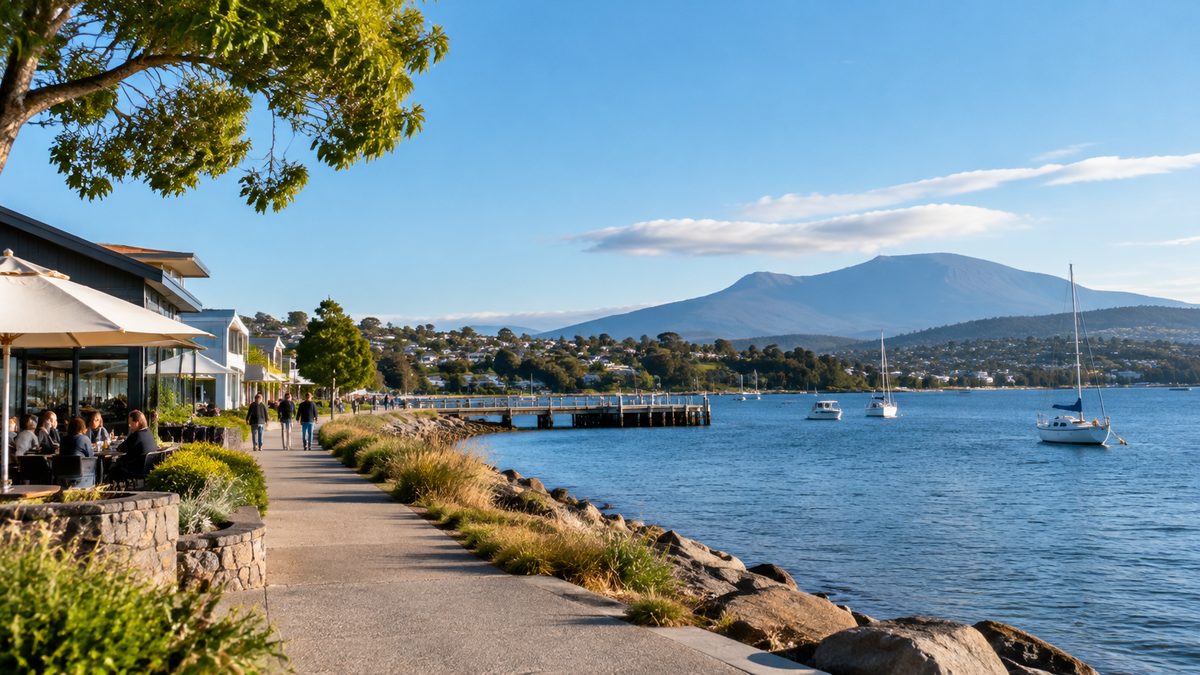
Bellerive is an easy half-day trip from central Hobart, with a historic village, waterfront paths, places to eat and a sheltered beach within walking distance. It sits across the River Derwent in the City of Clarence, close enough for a short outing but different enough to feel like a change of scene. A ferry gives you the best sense of the harbour. Buses offer more departure choices, while driving suits visitors who want to continue along the eastern shore.
This guide focuses on making the trip from Hobart simple. It explains how to get there, what fits into one visit and how to avoid wasting time on awkward connections. The main idea is to treat Bellerive as a compact waterfront outing rather than a long list of separate sights.
Why cross the river for Bellerive?
Bellerive rewards a slow visit. The old village centre lies near the water, with cafes and local shops around Cambridge Road and nearby streets. From there, you can reach the marina, Kangaroo Bay, the coastal path and Bellerive Beach without needing another vehicle.
The suburb is officially Bellerive, Tasmania. It forms part of greater Hobart but sits outside the Hobart City Centre on the eastern shore. The river creates a clear break between the two areas. You leave the busier city streets, cross or travel beneath the line of the Tasman Bridge, and arrive beside lower buildings and open water.
Visitors sometimes expect a large tourist precinct. Bellerive is smaller and more local than that. Its appeal comes from how well the parts connect. You can have lunch, walk beside the marina and sit on the beach without building a tight schedule. That makes it useful on a mild afternoon or on a day when a longer drive around southern Tasmania feels like too much.
Should you take the ferry, bus or car?
Take the ferry when its operating times suit your day. The river crossing turns the journey into part of the visit and brings you to Bellerive Pier beside Kangaroo Bay. You step off close to the waterfront paths and within a short walk of the village shops.
Check the current timetable before leaving because services can vary by day and operating period. Allow a buffer for the return journey. A ferry plan works best when you choose your preferred return service before starting your walk.
Metro Tasmania buses are the practical fallback. Services leave the Hobart side and cross the Tasman Bridge into the eastern suburbs. The correct route and stop depend on where you want to begin, so use the current journey planner rather than relying on an old route number. Starting near the village suits a food-first visit. Starting closer to Bellerive Oval may suit an event day or a beach-focused plan.
Driving gives you the most control, but traffic can erase that advantage. The Tasman Bridge is a major commuter route, and delays often build around peak travel periods. Parking pressure also rises when a large match or concert is held at the oval. If you drive, arrive early and obey local signs instead of assuming every nearby street offers unrestricted parking.
Visitors from a very large centre may misjudge the scale. The trip is nothing like travelling from the Sydney central business district to an outer beach suburb. Hobart and Bellerive face each other across a relatively narrow part of the Derwent, so the outing can fit into half a day.
Where should you begin once you arrive?
Begin at Kangaroo Bay if you arrive by ferry. The bay gives you an immediate view of the marina, the western shore and the movement of boats across the river. It also helps you understand the layout before heading inland.
The Bellerive Boardwalk follows the water around the marina area. It is the natural first leg of the walk because it stays close to the arrival point and requires little planning. Pause where the view opens toward kunanyi/Mount Wellington and central Hobart. Cloud, wind and afternoon light can change the scene within minutes.
From the waterfront, move into the village around Cambridge Road. This is the useful point for coffee, lunch or supplies. Bellerive does not require a fixed dining list because opening hours and businesses change. Look at the day’s trading hours before committing to a late meal, especially on Sundays or public holidays.
The village contains older buildings that reflect the area’s maritime past, though it remains a working suburb rather than an open-air museum. Read any on-site interpretation you find, but also pay attention to the street pattern. The short distance between the former foreshore activity, the commercial strip and the residential slopes explains how the settlement grew.
How do you build the best waterfront walk?
Use a one-way sequence instead of doubling back at random. Start at Kangaroo Bay, follow the Bellerive Boardwalk, pass through the village, then continue towards the oval and beach. Return by the most direct safe route when your ferry or bus time approaches.
The route is easy to shorten. If you have about two hours, stay around the bay, boardwalk and village. With half a day, add the beach and a longer break for food. Exact walking time will change with your pace, photo stops and any event controls near the oval.
Footpaths and waterfront sections vary in exposure. Take care near road crossings and marina access points. Families should keep children close beside traffic and working boat areas. Visitors using wheelchairs or prams should check current access conditions before travelling because building entrances, gradients and temporary works can affect an otherwise short route.
A common mistake is walking too far without watching the return timetable. The waterfront makes distance feel shorter than it is. Set a turnaround alarm on your phone, with enough time for a calm walk back to the pier or bus stop.
Is Bellerive Beach worth adding?
Bellerive Beach, Tasmania is worth adding when the weather is calm and you have at least an extra hour. The curved beach faces the Derwent near the mouth of Kangaroo Bay. It offers open water views and more space than the compact village waterfront.
The beach works well as the final stop because it gives you somewhere to rest after walking. Conditions on the Derwent can change quickly, however. Wind can turn a pleasant shore visit into a cold one even when central Hobart feels mild. Carry a warm layer and use sun protection. Tasmania’s cool air can hide strong ultraviolet exposure.
Treat the water as open natural water, not as a controlled pool. Check local signs and current conditions before swimming. Watch children closely and stay clear of boating activity. If the weather turns, shorten the beach stop and return to the village rather than forcing the plan.
The beach also shows why Bellerive works as a small outing. You can move from shops to sand on foot, without the long drive required for many beaches beyond metropolitan Hobart.
What should sports fans know about the oval?
Bellerive Oval sits near the village and beach. It is one of Tasmania’s best-known cricket grounds and also hosts Australian rules football and other major events. Sponsorship names can change, so Bellerive Oval remains the clearest geographic name for trip planning.
On a quiet day, the ground is one point along the walk. On an event day, it reshapes the whole suburb. Buses become busier, nearby parking fills and pedestrian controls may alter your route. Check the venue’s event information before leaving Hobart, even if you are not attending. A large crowd can affect your meal choice and return time.
If the oval is your main destination, plan transport around gate times rather than general sightseeing. Add the village or beach before the event if daylight allows. After a match, expect demand to peak at the same time across buses, ferries and rideshare services.
Where does Bellerive’s local identity come from?
The waterfront explains much of it. Bellerive developed around river access, shipping and links with Hobart, while later road growth tied it more closely to the wider City of Clarence. The suburb now combines an old village core with sporting activity and everyday residential life.
One well-known business link is Blundstone Footwear. The company has deep Tasmanian roots, and the Blundstone name is strongly tied to Hobart and Bellerive through its local history and sponsorship of the oval. Visitors should avoid treating the suburb as a branded attraction, though. Its character is found in the streets, foreshore and continuing use of the river.
This local scale is easy to miss if you rush from the pier to a single venue. Leave room to notice fishing boats, weather moving across the mountain and the way the village turns its face towards the water. These details explain Bellerive better than a checklist of landmarks.
What can you fit into two hours?
Two hours is enough for a focused visit if your transport lines up. From the pier, walk around Kangaroo Bay and along the Bellerive Boardwalk. Continue into the village for coffee or a quick meal, then return to your departure point. This plan keeps every stop close and leaves a margin for service delays.
If you arrive by bus, reverse the order where useful. Begin in the village, walk down to the marina and finish near the ferry if a suitable return sailing is available. Confirm that service before setting out. Do not assume the ferry will match the bus timetable.
A two-hour plan should exclude the beach unless you are happy to skip a meal. Trying to fit the village, the full waterfront, the oval and beach into a short gap turns an easy outing into a race.
How should you plan a half-day visit?
Allow four to five hours for the fuller route. Arrive at Kangaroo Bay, explore the waterfront and eat in the village. Continue past Bellerive Oval to Bellerive Beach, then return for your chosen service. This gives you time to sit rather than treating every place as a photo stop.
Choose the direction of travel around the weather. Visit the beach earlier if wind or rain is forecast to build. Save the village meal for later if shops will still be open. In cool conditions, begin with the outdoor sections and finish somewhere sheltered.
Keep one part optional. The beach is the easiest section to drop if transport runs late. On an event day, the oval area may be the part to avoid. A flexible plan protects the core experience: the river crossing, Kangaroo Bay and the village waterfront.
What practical details prevent a poor trip?
Check live transport information on the morning of your visit. Timetables, stop locations and service rules can change. Confirm the last useful return option rather than the last service of the entire day.
Dress for wind from the river. A light jacket can matter even in warmer months. Wear shoes suited to paved walking and short slopes. Carry water, particularly if you plan to continue to the beach.
Use public toilets when you pass a known facility instead of waiting until the end of the walk. Availability and opening times can change, so check current City of Clarence visitor information. Ask at your food stop if you need local directions.
Keep event dates in mind. A busy day can be lively, but it changes parking, queues and the feel of the waterfront. Visitors seeking a quiet village walk should choose a non-event morning or early afternoon.
Do not build the day around exact travel minutes. Bridge traffic, boarding time and weather can shift a short trip. A modest buffer is more useful than adding another stop.
Which plan gives you the best first visit?
The best first visit uses the river as the organising thread. Travel from Hobart by ferry if a suitable service is running, begin at Kangaroo Bay, walk the Bellerive Boardwalk and stop in the village. Add Bellerive Beach when time and weather support it. Use a bus for the return if that creates a better schedule.
This approach shows the suburb in a clear order. You see its link with Hobart first, then its working waterfront, village centre and open shore. It also keeps the trip useful if conditions force you to turn back early.
The Hobart Field Guide is an independent publication. For more local planning ideas, use the publication’s main Hobart guide to connect this outing with other parts of the city, while keeping enough time to enjoy Bellerive at its own pace.
Choose your return ferry or bus before leaving Hobart, then build the visit around a walk from Kangaroo Bay through the village towards Bellerive Beach.