Cafes in Hobart City Centre
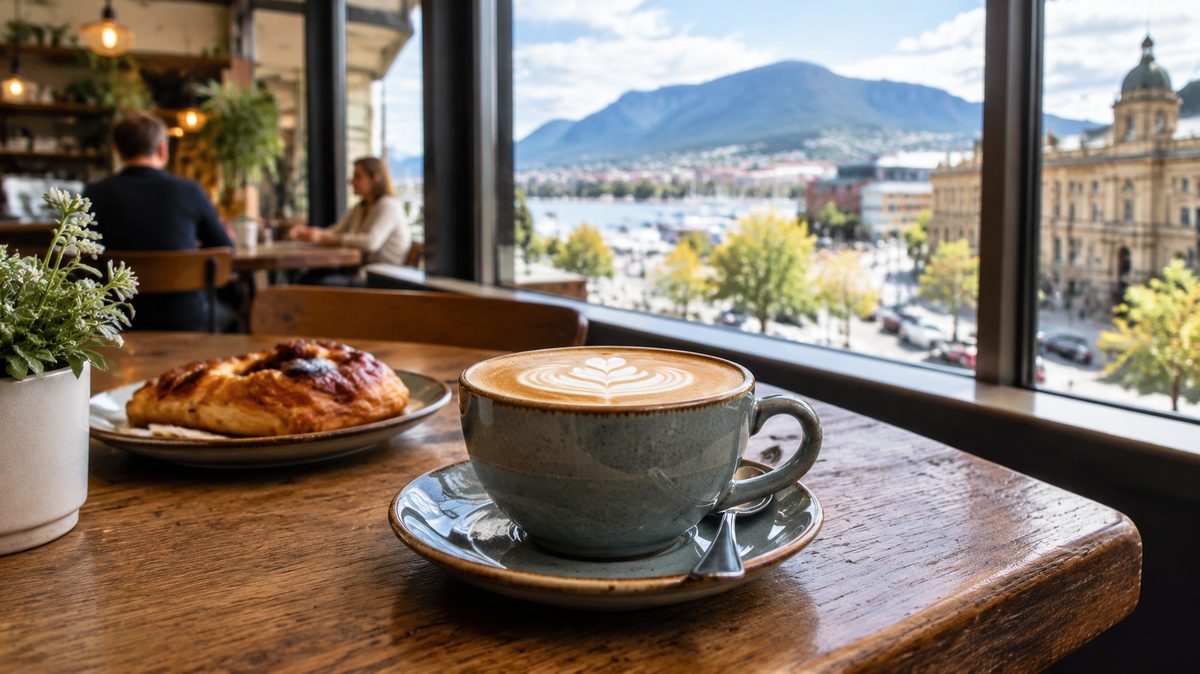
The best cafes in Hobart city centre sit between the Elizabeth Street shopping blocks, the inner waterfront and Salamanca, all within a compact walking area. Choose Elizabeth Street for serious coffee and quick breakfasts, the central shopping streets for convenience, or the waterfront for a slower meal with a view. Hobart’s centre is small enough to compare several options on foot, but opening hours and kitchen times can narrow the choice.
This guide focuses on choosing the right cafe for the moment. It covers where to look, what each precinct does well and how to avoid a wasted walk. The Hobart Field Guide is an independent local publication, so the aim is a useful editorial guide rather than a ranked list shaped by paid placement.
Where does the city centre cafe area begin and end?
For cafe planning, Hobart’s centre runs from the northern end of the main retail grid to Salamanca Place and the docks. The most useful streets are Elizabeth Street, Liverpool Street, Murray Street and the lanes between them. The eastern edge meets Franklin Wharf and Constitution Dock, while the southern end flows into Salamanca.
The Central business district is easy to cross. A walk from the Elizabeth Street Mall to the docks takes about ten minutes at a steady pace. Salamanca Place is another short walk beyond the waterfront. This means a cafe that looks distant on a map may still be practical before a museum visit, ferry trip or meeting.
Elizabeth Street, Hobart is a useful starting point because it links retail blocks with the northern dining area. The city end has espresso bars, bakeries and cafes built for office workers. Farther north, the street becomes a broader restaurant strip. Check the address before walking because “Elizabeth Street” can refer to places well beyond the compact city core.
Which precinct suits the kind of cafe visit you want?
The central grid works best for speed. Small espresso bars around Elizabeth, Liverpool and Murray streets serve commuters, workers and shoppers. Seating may be limited, but coffee usually arrives fast. This area suits a takeaway cup, a light breakfast or a short meeting.
The inner waterfront suits a longer stop. Cafes near Franklin Wharf and Constitution Dock place you close to fishing boats, ferries and harbour views. The setting comes with a trade-off. Waterfront tables can fill quickly when cruise passengers, tour groups and weekend visitors arrive.
Salamanca Place suits people who want breakfast before browsing galleries, warehouses and shops. Many venues occupy old stone buildings, which can mean cosy rooms, courtyards or limited natural light. On Saturday, Salamanca Market changes the whole area. Foot traffic rises early, queues grow and nearby parking becomes harder to find.
The blocks around Liverpool Street are practical when food matters as much as coffee. This part of town has bakeries, casual dining rooms and cafes with fuller breakfast menus. Searches for “Liverpool Street station” can cause confusion because central Hobart has no operating passenger railway station. Liverpool Street is served by city bus stops, and the main bus interchange is in the central street network.
How can you tell whether a cafe takes coffee seriously?
Start with the menu. A focused espresso list, a named roaster and a choice of beans usually signal care. Specialty coffee cafes may describe the origin, processing method or flavour of a bean. That detail is useful when staff can turn it into a clear recommendation.
Ask what is working well that day. A good answer should be simple, such as a chocolate-heavy blend for milk coffee or a brighter single origin for black coffee. Staff should also be able to explain whether a bean will taste sharp, sweet, nutty or rich. Technical language means little if it does not help you choose.
Coffee roasting has a strong place in Hobart’s cafe culture. Some central cafes use beans roasted within Tasmania, while others buy from mainland roasters. Local roasting does not guarantee a better cup. Fresh beans, a clean machine and careful preparation have more effect than the distance between the roaster and the cafe.
Drip coffee is less common than espresso but worth seeking if you enjoy a lighter cup. Batch brew is prepared in larger amounts and can be served quickly. A hand-poured filter takes longer and may cost more. Both methods reveal flavours that can disappear under milk, so they suit drinkers who want to taste the bean itself.
Watch the workflow during a rush. Cups should move in a clear order, milk should be textured for each drink and benches should remain controlled. A long queue is not proof of quality, yet a calm team dealing with one is a useful sign.
Where should you go for a fast breakfast?
Choose the retail grid if you have less than 30 minutes. Look for cafes with food displayed near the counter, a short menu and a clear takeaway system. Toasted sandwiches, filled rolls, pastries and pre-made bircher-style breakfasts are safer choices than dishes that need a full kitchen service.
Order before finding a table unless a sign says table service. Hobart cafes use both systems, sometimes within the same block. Waiting at a table in a counter-service venue can waste much of a short break.
Murray Street and the nearby lanes are useful for people moving between offices, shops and government buildings. These venues often experience a sharp weekday rush before work and again around lunch. Arriving after the first rush may give you more seating without pushing breakfast too late.
If you need to catch a tour or ferry, buy coffee closer to the departure point. A cafe five minutes away can become a risk when there is a queue. The streets around Franklin Wharf are better for this purpose than a favourite cafe on the far side of the centre.
What makes a cafe suitable for a slow breakfast or brunch?
A slow breakfast needs more than a long menu. Check whether the room has proper tables, whether bookings are accepted and when the kitchen closes. Some coffee-focused venues have excellent drinks but little food. Others run a full kitchen and become busy brunch rooms after 9 am.
Look for dishes that use Tasmanian produce with purpose. Local bread, cheese, eggs and seasonal fruit can add value when the cooking is sound. A menu does not become better because every item carries a place name. Clear sourcing is useful; vague claims are not.
Salamanca Place is a strong choice when breakfast forms part of a half-day outing. You can eat, browse the surrounding shops and continue toward the waterfront without returning through the same streets. On market day, eat early or accept a wait. Salamanca Market normally draws its heaviest foot traffic through the morning, and nearby cafes benefit from that crowd.
For conversation, choose a venue away from the main counter and blender noise. Stone rooms can look appealing but carry sound. Outdoor seating may be quieter on a calm day, though Hobart’s wind can make an exposed table less comfortable than the view suggests.
Are waterfront cafes worth choosing for the view?
Yes, when the harbour is part of the plan. Constitution Dock offers one of the clearest Hobart settings, with working boats, historic buildings and the city rising behind the water. A waterfront cafe can turn a simple coffee into a useful rest between attractions.
Do not assume every place near the water faces it. Some cafes sit inside buildings, across a road or behind working wharf areas. Check the seating layout before ordering if the view matters. Outdoor tables may also have little shelter from wind or strong afternoon sun.
Franklin Wharf works best for travellers connecting a cafe stop with a ferry, harbour walk or visit around the docks. Keep boarding time in mind. Table service, a full breakfast and a busy kitchen can take longer than expected, even when the cafe is close to the terminal.
The waterfront is usually less direct for someone crossing town to shop or attend a meeting. In that case, a cafe inside the street grid saves time. The harbour should be the reason for choosing the harbour, not a detour added to an already tight morning.
When should you visit to avoid queues?
Weekday cafes are busiest before office hours and around noon. Brunch venues tend to build later in the morning. Saturday brings an earlier surge near Salamanca, while Sunday demand is spread across the centre because fewer office-focused counters may open.
For a quiet sit-down breakfast, arrive close to opening time. For a quick weekday coffee, the period after the morning commute is often easier. Late afternoon is less reliable because many Hobart cafes close before dinner service begins.
Always check the venue’s current hours on the day. Public holidays, winter schedules and staff availability can change opening times. A map listing may lag behind a cafe’s own website or social page. Kitchen hours can also end before the doors close.
Weather shifts demand. Rain sends more people indoors, while a clear Saturday fills outdoor seats around Salamanca and the docks. If the forecast is wet, choose a larger dining room or keep a second option within the same block.
How much should you expect to spend?
A takeaway coffee is the lowest-cost option, followed by coffee with a pastry or toast. A cooked breakfast at a central sit-down cafe costs much more once drinks and extras are added. Waterfront position and table service may lift the total, though price varies more by menu style than by street.
Read the extras before ordering. Changes such as alternative milk, an extra espresso shot, gluten-free bread or added sides can raise the bill. If value matters, choose a complete dish rather than building a basic plate through several additions.
Specialty coffee can cost more when a rare bean or hand-brewed method is involved. That higher price pays for the coffee itself and the extra preparation. It offers little value if you prefer a familiar milk drink, so order for your taste rather than the prestige of the bean.
How should dietary needs shape your choice?
Check the full menu before joining a queue. A cabinet may contain one vegetarian item but no safe option for a person with coeliac disease. Gluten-free does not always mean free from cross-contact, and plant-based does not always mean dairy-free if sauces or baked goods contain milk.
People with allergies should speak to staff before ordering. Ask about shared grills, fryers, utensils and display cabinets. A confident answer backed by a clear process is more useful than a long menu of substitutions.
Alternative milks are common in central cafes, but brands and preparation vary. If texture matters, ask which option works best in the drink you want. Some plant milks split in acidic coffee, while others produce a smoother flat white.
Can you compare several cafe areas in one walk?
Yes. Begin around Elizabeth Street for espresso-focused options, then cross the retail grid through Liverpool Street and Murray Street. Continue downhill toward Constitution Dock, follow the edge of Franklin Wharf and finish at Salamanca Place. This route lets you compare the city’s main cafe settings without turning the morning into a long hike.
Do not order a full drink at every stop. If coffee is the focus, share drinks, choose a smaller size or select one cafe for breakfast and another for a later cup. The point is to compare areas while still enjoying the city.
People who want a broader plan can start with The Hobart Field Guide and build a cafe stop around the day’s main activity. A harbour visit calls for a waterfront venue. Shopping favours the central grid. A market morning points toward Salamanca.
What mistakes lead to a poor cafe choice?
The first is trusting distance without checking hills. Much of the centre is easy to walk, but routes heading west rise away from the waterfront. A short climb can matter for people with limited mobility, a pram or heavy luggage.
The second is choosing by queue length. A busy cafe may be excellent, visible or simply beside a major visitor route. Check the menu and service style before waiting. A quieter venue one street away may suit your needs better.
The third is expecting every cafe to serve food all day. Kitchens may close after lunch even while coffee service continues. Cabinet food can also sell out. Confirm the kitchen time if a late meal is the main reason for visiting.
The fourth is crossing the centre for a famous name when the setting does not fit the day. The best cafe for a quick takeaway is rarely the best choice for a two-hour catch-up. Start with the purpose, then choose the precinct.
What is the simplest way to choose?
Use one test: decide whether coffee, food, speed or setting matters most. Choose Elizabeth Street and the central grid for fast service and coffee choice. Pick Liverpool or Murray streets when convenience and breakfast food lead the decision. Head to Franklin Wharf or Constitution Dock for harbour atmosphere. Use Salamanca Place when the cafe is part of a market, gallery or shopping visit.
Choose your main activity first, then select a cafe within a ten-minute walk of it and confirm today’s opening and kitchen hours before leaving.