Parking Near Hobart Waterfront
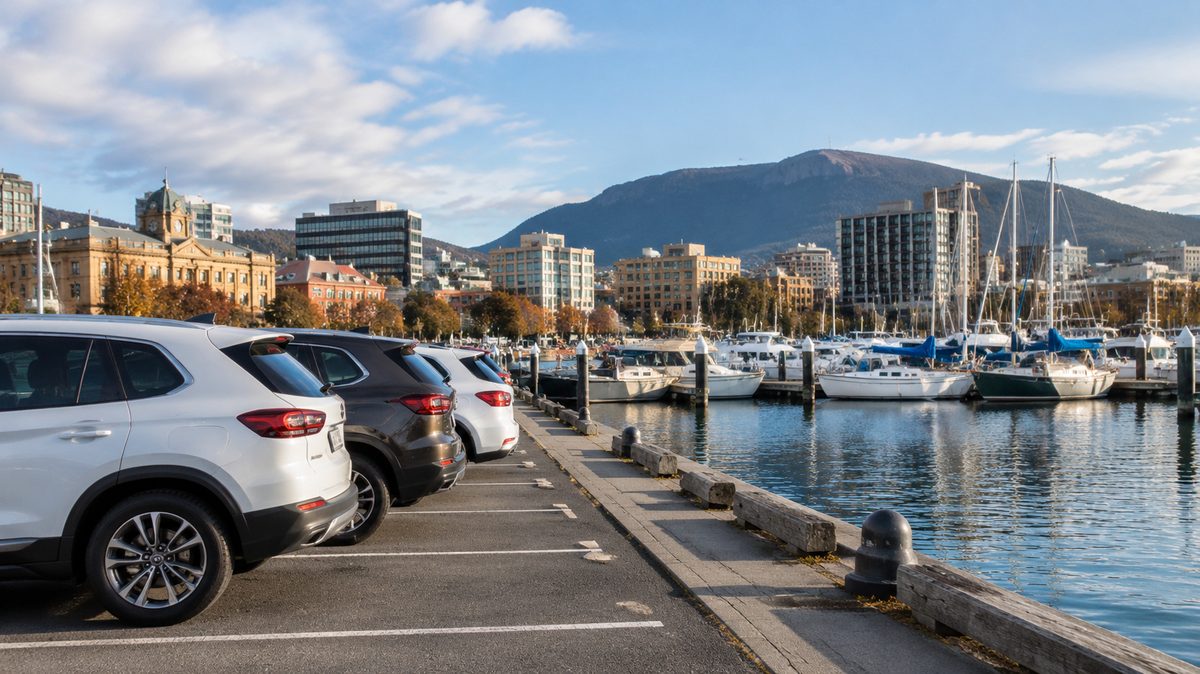
The best parking near Hobart waterfront is usually one or two blocks back from the water, where larger car parks give you more choice and an easier exit. The right place depends on whether you are heading to Salamanca Place, Constitution Dock, a ferry terminal or the northern docks. Trying to park beside your exact destination often adds time because the closest spaces fill first and may have short limits.
The Hobart waterfront is compact enough to make a short walk worthwhile. A space five to ten minutes away can be more useful than a prime kerbside bay with a tight time limit. This guide explains how to choose an area, read the restrictions and avoid circling the docks.
Which parking area matches your destination?
Choose your parking area before you enter the waterfront precinct. The waterfront stretches from the Salamanca side through Franklin Wharf and Constitution Dock towards Hunter Street. These areas look close on a map, but busy roads, events and pedestrian traffic can slow a driver moving between them.
For Salamanca Place, Battery Point or the southern end of the harbour, look for public parking around Salamanca and the nearby city blocks. For Constitution Dock and central Franklin Wharf, city-centre parking often gives you the simplest approach. For Hunter Street, the northern waterfront or Macquarie Point, start north of the central docks rather than driving through the busiest part of the harbour.
This destination-first method also makes departure easier. A driver who parks on the correct side of the precinct avoids crossing the waterfront twice, getting caught behind event traffic or making a difficult turn during the evening rush.
Should you use a car park or search for a street bay?
A larger off-street facility is the safer choice when you need more than a brief stop. A managed Parking lot usually has clear entry signs, marked bays and payment instructions in one place. It may also offer longer stays than the most convenient street spaces.
Street parking works well for a quick pickup, a short errand or an early visit. Its weakness is uncertainty. A space may have a short limit, loading restriction, permit condition or operating period that does not suit your plans. Some restrictions change by time or day, so the sign beside the bay matters more than a general parking map.
Use this simple rule:
- Choose off-street parking for a meal, market visit, harbour cruise or several hours of sightseeing.
- Consider street parking for a short stop when you can read the sign before leaving the car.
- Avoid building your schedule around finding a free bay at the water's edge.
- Allow extra time when an event, festival or large vessel is bringing more people into the precinct.
A cheaper bay is poor value if its time limit forces you to leave halfway through a booking. Compare the expected length of your visit before comparing the price.
Where should Salamanca visitors look?
Drivers visiting Salamanca Place should search around the Salamanca precinct and the city blocks immediately behind it. This keeps the final walk short while avoiding repeated loops along the waterfront. Parking farther uphill may also work for people comfortable with Hobart's slopes, but it is less suitable for visitors with limited mobility or heavy bags.
Demand rises sharply during Salamanca Market. On market days, the best strategy is to arrive early or accept a longer walk from the start. Hunting for a perfect space near the stalls can take longer than parking several blocks away and walking back.
Check whether your chosen route is affected by temporary closures, market operations or event controls. A street that was open during a weekday visit may work differently during a major Saturday market. Follow temporary signs and directions from authorised traffic staff.
Salamanca is also busy at night. If you plan to stay for dinner, choose a space that remains valid for the full booking rather than assuming a daytime restriction ends when you arrive. Read every panel on the sign because separate rules may cover different hours.
What works best for Constitution Dock and Franklin Wharf?
For Constitution Dock, aim for central waterfront or nearby city parking, then finish the trip on foot. The dock sits beside an active mix of roads, working harbour space and pedestrian areas. Driving closer does not always save time, especially when people are crossing between the city and the water.
Franklin Wharf serves several types of visit. You may be meeting a tour, boarding a vessel, attending an event or collecting someone. Each task needs a different parking plan. A passenger with a fixed departure time should favour certainty and arrive early. Someone making a quick pickup should confirm the operator's meeting point before entering the precinct.
Do not treat every open paved area as public parking. Parts of the waterfront support commercial, maritime and event work. Painted lines, access gates and signs show whether a space is available to ordinary vehicles. Keep service lanes, loading zones and emergency access clear even if you expect to stop for only a minute.
How should ferry and cruise passengers plan?
If you are boarding a ferry, tour boat or harbour cruise, confirm the exact wharf before choosing a car park. Hobart has several nearby departure points, and a vague instruction such as “meet at the waterfront” is not enough. Check the operator's booking message for a street name, wharf name and check-in time.
For a Cruise ship visit, traffic can increase around the port and nearby city streets. Passenger coaches, taxis and service vehicles may also need access. Leave more time than you would on a quiet weekday, even when your destination is outside the immediate cruise terminal area.
Visitors sometimes confuse places with similar names. Hobart's Princes Wharf is in the Salamanca waterfront area. Search results for Princes Wharf, Auckland refer to New Zealand and will send you to the wrong city. Some online listings may also display wording such as Princes Wharf 1. Check that every map result says Hobart, Tasmania before following directions.
If you have luggage, one person can remain with the bags at an approved meeting point while the driver parks. Never stop in a live traffic lane, taxi zone or restricted port area to unload. Operators can advise where passengers should arrive when mobility or baggage is a concern.
Is Hunter Street a better choice for the northern waterfront?
Hunter Street is the logical reference point for destinations around the northern side of the central waterfront. It can suit visits to nearby hotels, cultural venues, restaurants and harbour businesses. Parking north of Constitution Dock may also reduce the need to drive through the Salamanca end of the precinct.
Check the walking route as well as the straight-line distance. Some waterfront areas include cobbled surfaces, kerbs or routes shared with service traffic. A slightly more distant space with a clear footpath may be easier for a pram, wheelchair or wheeled suitcase.
Drivers heading to an evening booking should also think about the return walk. Choose a legal, well-used route and note the car park entrance before leaving. Large buildings and similar-looking wharf sheds can make a parked car harder to locate after dark.
How do you check prices and time limits?
Use the sign or payment machine at the space as your final source. Online maps help you find options, but they may show old hours, prices or access details. Temporary event controls can also override normal arrangements.
A Mobile app may let you pay for some metered parking or check the active parking session. Confirm the zone number against the sign before paying. A wrong zone can leave the actual bay unpaid even though the app shows a successful transaction.
Before walking away, check:
- Whether the bay is available to your type of vehicle.
- When the restriction starts and ends.
- The maximum stay allowed.
- Whether payment is required at that time.
- Whether another panel adds a loading, permit or event rule.
- Whether your session matches the correct registration and zone.
Take a photo of the sign and note where the car is parked. This gives you a quick reference if plans change. It also helps when a group member returns to the vehicle before everyone else.
When does parking become hardest?
Parking pressure is highest when several demands overlap. Saturday market trade, major events, warm evenings, school holidays and cruise arrivals can all bring more vehicles to the waterfront. Rain may increase demand for spaces close to venues because fewer people want a longer walk.
Meal times create another squeeze around Salamanca and the central docks. If you have a firm restaurant or sailing time, build the parking search into your arrival plan. Reaching the precinct at the booking time leaves no room to find a bay, pay and walk to the venue.
A useful target is to reach your chosen parking area at least 20 minutes before a fixed check-in. Allow more time during a large event. This is planning time, not a claim that parking will always take 20 minutes.
What mistakes waste the most time?
The first mistake is following the blue location dot without choosing a parking area. Navigation may deliver you to a venue door where stopping is banned or where the nearest bays are already full. Set the parking facility or street area as the destination instead.
The second mistake is circling one block. If the first pass shows no suitable space, move to the backup area. Repeating the same loop adds traffic and rarely improves the odds.
The third mistake is checking only the price. A low hourly rate does not help when the stay limit is shorter than your tour or meal. Departure access matters too. Some facilities have set opening arrangements, so confirm that you can retrieve the vehicle when your visit ends.
The fourth mistake is trusting an empty bay without reading its sign. Loading zones and permit spaces may look inviting because other drivers know they cannot use them. The absence of parked cars can be a warning.
The fifth mistake is paying before checking the zone. Match the machine or app details to the bay, then confirm the vehicle registration. Small typing errors can cause larger problems later.
How can drivers with limited mobility reduce the walk?
Accessible bays are available in parts of central Hobart, but their location and availability can change. Check the City of Hobart's current parking information and the destination's access advice before travelling. Display the required permit correctly and follow the conditions shown at the bay.
Passengers who cannot manage slopes or uneven ground should focus on the route from the bay to the venue. Hobart's waterfront is mostly low and central, while nearby streets can climb quickly away from the harbour. The nearest bay by distance may still involve an awkward kerb, rough surface or steep return trip.
For a booked activity, contact the operator about an approved passenger drop-off point. A legal drop-off followed by parking elsewhere can be safer than forcing the passenger to cover a difficult route.
What is the simplest parking plan?
Save one preferred area and one backup before leaving. Match both to the end of the waterfront you need. Use Salamanca-area parking for the southern precinct, central city or wharf parking for Constitution Dock and Franklin Wharf, and northern options for Hunter Street.
On arrival, read the sign, confirm the full stay is legal and pay through the stated method. If your first area is full, go straight to the backup instead of circling. The Hobart Field Guide is an independent publication, so live parking signs and official traffic directions always take priority over editorial guidance.
Actionable takeaway: set your destination to a suitable parking area, save one backup nearby and arrive 20 minutes before any fixed waterfront booking.