Tasmanian Museum and Art Gallery Visitor Guide
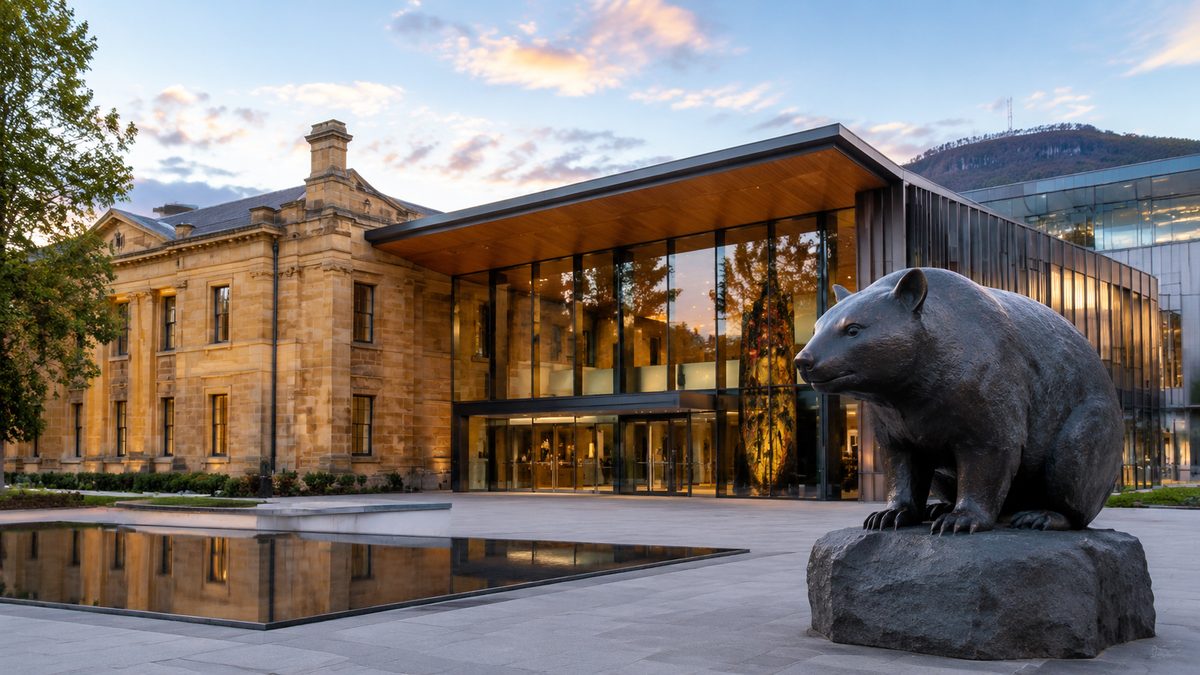
Allow about two hours to explore the Tasmanian Museum and Art Gallery, starting with the island's natural history before moving through its Aboriginal, colonial and art collections. Known as TMAG, the museum sits beside the waterfront in central Hobart. General admission is usually free, although special events may have a fee. Opening days, hours and gallery access can change, so check the museum's official visitor information before leaving.
TMAG works best when treated as a connected story about Tasmania rather than a set of separate rooms. Its displays explain how the island formed, how Aboriginal Tasmanians have maintained culture and community, how British settlement changed the land, and how artists have recorded or challenged those changes. This Tasmanian Museum and Art Gallery visitor guide gives you a clear route through that story without trying to see every object.
Where is TMAG and how should you get there?
TMAG is at Dunn Place, near the corner of Davey and Argyle streets. It is within easy walking distance of central Hobart, the waterfront and the main city bus stops. Walking is often simpler than driving because nearby parking can fill during work hours, school holidays and major events.
The museum entrance is close to Constitution Dock. From the dock, walk towards the low group of historic and modern museum buildings rather than following the waterfront towards Salamanca Place. The short approach helps place the museum in context. Fishing boats, working harbour areas and old stone stores show why this part of Hobart became a centre for trade and government.
Visitors arriving by car should check current parking limits and fees before choosing a space. Some nearby street bays suit a short visit, while city car parks make more sense if TMAG is one stop in a full day. Allow extra time when the waterfront hosts a festival, market or public event.
What should you know before entering?
Entry arrangements can vary by day. Check opening hours, temporary closures and event notices on the official TMAG website before your visit. Large bags may need to be stored, and some exhibitions may limit photography. Staff at the entrance can explain current access rules and point out lifts, toilets or quieter areas.
The museum contains historic buildings with changes in floor level as well as newer galleries. Visitors with limited mobility should ask for the most direct step-free route. Families can also ask which areas have hands-on displays or child-focused material that day.
A printed map is useful, but do not try to follow every numbered space in order. The site grew over time and can feel like several buildings joined together. Choose a theme first, then use signs to move between related galleries.
Which route gives the clearest picture of Tasmania?
Begin with Geology and natural history. This gives you the physical frame for everything that follows. Tasmania's separation from mainland Australia, its varied rock types and its changing climate shaped where plants, animals and people could live. Once you understand the island as a place, the human history galleries make more sense.
Continue to displays about Aboriginal Tasmanians and the Tasmanian Aboriginal Gallery. Read the interpretation carefully rather than treating cultural objects as curiosities. These galleries deal with living cultures, invasion, survival and continuing connection to Country. Names, dates and labels may reflect changing research or consultation with Tasmanian Aboriginal communities.
Move next into the colonial buildings. Their thick walls and storage spaces are part of the evidence, not a neutral backdrop. They reveal how the British administration supplied a remote settlement and controlled valuable goods. Finish with the art galleries, where different views of Tasmania appear through paintings, decorative work and newer forms of art.
This order usually takes about two hours at a steady pace. For a one-hour visit, choose natural history and the Tasmanian Aboriginal Gallery, then look through one historic building. With half a day, add the art galleries and spend more time reading object labels.
Why does the natural history collection matter?
The natural history displays explain Tasmania through specimens, field records and scientific study. They help visitors understand why the island contains species and habitats that differ from those on mainland Australia. Look for the link between landform and life rather than moving quickly from one mounted animal to the next.
Geology provides the base layer. Rock, soil and past ice movement affected rivers, forests and human travel routes. Displays may also explain how fossils reveal environments that no longer exist. This turns a drive through Tasmania into something easier to read. Dark rock beside a road, a steep valley or a broad river plain becomes evidence of a much longer process.
The thylacine material often attracts the largest crowd. It is worth seeing, but extinction should not dominate your whole visit. Tasmania's living species and current habitats deserve equal attention. Museum records can help researchers track changes in range, form and population over long periods.
How should you approach the First Peoples displays?
Approach them as accounts of living Tasmanian Aboriginal cultures, not as a closed chapter from before British settlement. Aboriginal Tasmanians have maintained identity, family ties and cultural practice despite invasion, removal and false claims that their people had disappeared.
The Tasmanian Aboriginal Gallery may include cultural objects, historic records and work by contemporary makers. Pay attention to who wrote each label and whose view it presents. An old colonial record can reveal useful facts while also carrying the bias of the person who made it.
Some objects connected with Aboriginal communities raise questions about consent, ownership and museum collecting. Modern museum work may involve consultation, restricted access or the return of cultural material. If a display has limited detail, that choice may protect knowledge that is not meant for every visitor.
Adults visiting with children can explain the central point in plain words: Aboriginal people lived across lutruwita, Tasmania, for many generations before the British arrived, and their communities continue today. Avoid language that places them only in the past.
What do the old museum buildings reveal?
The historic stores show how government power worked through supplies. Food, tools and other goods had to be recorded, protected and issued. The buildings supported a settlement that depended on ships and strict administration.
The Commissariat Store dates from the early colonial period and forms part of the museum complex. Its stonework, small openings and heavy structure suit a building made to secure provisions. The nearby Bond Store served a related role by holding imported goods under customs control until duties were paid.
Do not confuse the Hobart building with results for Commissariat Store, Brisbane. Brisbane has its own former Commissariat Store, now associated with Queensland history. The Hobart store belongs to the Dunn Place complex and tells a Tasmanian colonial story.
These buildings also connect the museum to the harbour outside. Goods came through the waterfront, passed through official checks and entered stores like these. Standing inside the Bond Store after walking past Constitution Dock makes that supply system easier to picture.
What should you look for in the art galleries?
Use the art galleries to compare ways Tasmania has been represented. Colonial paintings can document clothing, settlement and land use, yet they may leave out conflict or present occupied land as empty. Later works may question those views or focus on identity and environmental loss.
Look at the label after forming your first view of a work. Note what the artist chose to include, then see whether the date or setting changes your reading. A calm landscape may have been made during a period of violent dispossession. A detailed portrait may tell you more about status than personality.
The museum buildings also carry design history. Architect Henry Hunter is linked with major nineteenth-century work in Hobart, including the former art gallery building in the TMAG group. His work is easier to understand when you notice the scale, materials and formal public face of the building rather than treating it as a shell around the collection.
Temporary exhibitions can change the value of a repeat visit. They may draw on TMAG's stored collection or bring together work around a focused subject. Check what is showing before arrival if art is your main reason for visiting.
How can families make the visit work?
Give children a search task instead of asking them to read every label. They might find one animal adapted to cold conditions or one object that arrived by ship. A clear task keeps attention on the collection while leaving room for questions.
Plan a break before children become tired. The nearby waterfront gives families space to reset, and food options are available around the central city. Check the museum's current rules before bringing food inside, as eating is generally limited to set areas.
For a hypothetical family with one hour, spend about half the visit in natural history. Use the remaining time for one cultural gallery and one historic room. Trying to cover the whole complex can turn an interesting visit into a race through doorways.
How can visitors with limited time choose what to skip?
Skip by subject, not at random. Choose the part that best fits the rest of your Hobart plans. If you are visiting wildlife sites later, focus on Aboriginal and colonial history at TMAG. If you have toured several colonial properties, spend more time with natural history and contemporary art.
Read the main wall text in each chosen gallery and inspect a small number of objects closely. This gives you a stronger grasp than scanning hundreds of labels. Photographs of permitted displays can help you recall names later, but taking a photo is no substitute for looking at the object itself.
If a school group or tour fills a room, move to another part of the complex and return. The connected buildings give you several route choices without losing the main story.
What can you visit nearby on the same day?
TMAG fits well into a walking day around central Hobart. Constitution Dock is close enough for a brief waterfront loop before or after the museum. Its working vessels and harbour structures reinforce the trade and maritime themes found inside.
Salamanca Place is also within walking distance. Its sandstone warehouses show another part of the port economy, although shops and public spaces now occupy much of the area. On Saturday, Salamanca Market can make the precinct busy, so visitors who want a quiet museum experience may prefer to visit TMAG early.
A simple route begins at the museum, continues along the waterfront and ends at Salamanca Place. Reversing it also works, but starting at TMAG gives you historical context before you inspect the harbour buildings. More ideas for organising a city day can be found through The Hobart Field Guide, an independent local publication covering practical ways to explore Hobart.
What mistakes reduce the value of a visit?
The first is arriving without checking current hours. Public holidays, installation work and private events can affect access. The second is spending most of the visit around one famous specimen while missing the wider natural history collection.
Another mistake is treating colonial stores as simple examples of attractive old architecture. Their purpose was tied to administration, customs and control. Read them alongside the Aboriginal galleries to understand that the same settlement brought invasion and deep harm to existing communities.
Visitors also lose context when they rush between rooms without noticing the site itself. Pause in the courtyard or near a change between buildings. The joins show how a colonial government complex became a modern public museum.
What is the best way to plan the day?
- Check access: Confirm the opening time, exhibitions and any gallery closures on the official TMAG website.
- Choose one main theme: Pick natural history, First Peoples history, colonial Hobart or art as your priority.
- Allow enough time: Set aside two hours for a useful first visit and more if a temporary exhibition interests you.
- Travel light: Carry only what you need so bag storage and narrow historic spaces cause fewer problems.
- Connect the site to the city: Walk past Constitution Dock or continue to Salamanca Place after the museum.
Check TMAG's current opening details, choose your priority gallery and reserve two hours before adding the waterfront walk.