Mona from Hobart by Ferry
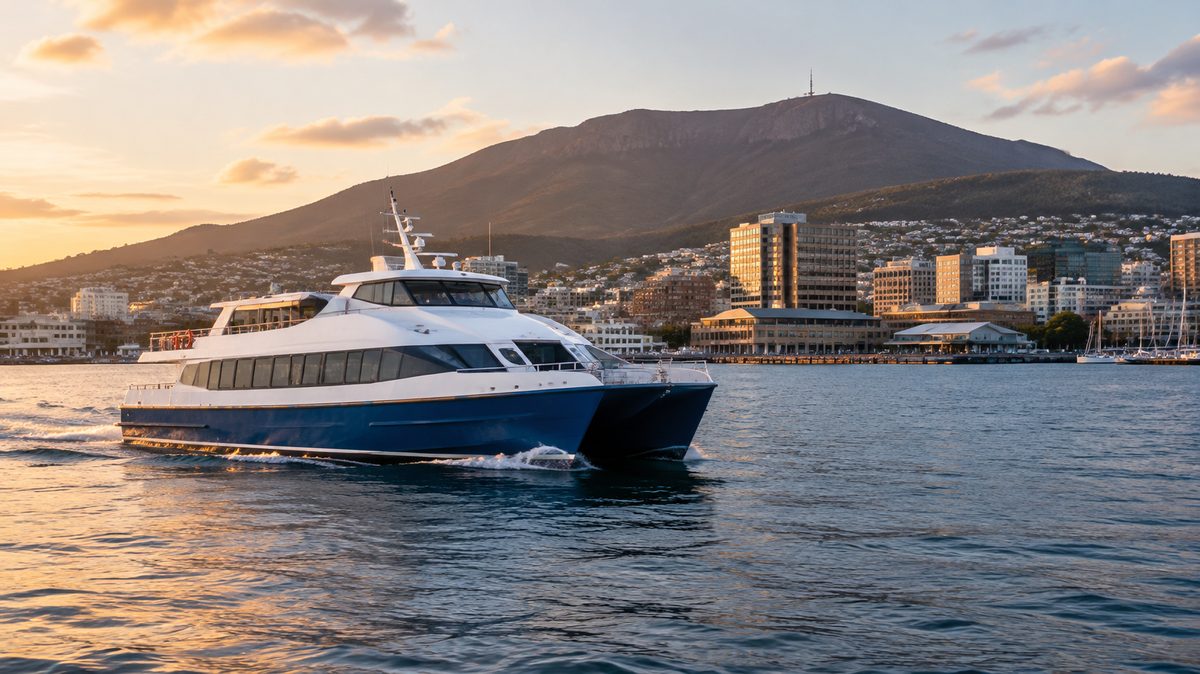
The easiest and most memorable way to reach Mona from central Hobart is the ferry from Brooke Street Pier. The trip follows the River Derwent to the museum’s private Jetty at Berriedale, Tasmania. It usually takes about 25 minutes each way, although passengers should allow far more time for boarding, delays and the walk into the Museum.
The ferry is part of the Mona visit rather than a basic transport link. Its unusual design, river views and dramatic arrival set the tone before you enter the galleries. Seats can sell out, so book the outward ferry, museum entry and return journey together. Confirm the live timetable and fare during booking because operating times and prices can change.
Where does the Mona ferry leave from in Hobart?
Mona ferries leave from Brooke Street Pier on Hobart’s waterfront. The glass-fronted building sits beside Franklin Wharf, close to Constitution Dock and Salamanca. Its central position makes it easy to reach on foot from much of the central business district.
Do not confuse Brooke Street Pier with the nearby cruise ship terminal or the other ferry points around Sullivan’s Cove. Look for Mona signs inside the pier and check the boarding information shown on your ticket. Staff can direct each Passenger to the right departure point.
If you are staying near Salamanca Place, allow about 10 minutes to walk there. Accommodation farther up the city’s hills may look close on a map but involve steep streets. Leave extra time if you have luggage, limited mobility or young children.
Drivers need to account for parking before joining the queue. Hobart’s waterfront spaces can fill early, while event days may bring road closures or heavier traffic. A short walk, taxi or local bus into the centre is often simpler than trying to park beside the Pier minutes before departure.
What should you book before the day?
Reserve three parts of the outing: admission to the Museum of Old and New Art, an outward ferry and a return ferry. A museum ticket does not automatically secure transport. Ferry availability can also differ between the two directions, so check the whole day before paying.
Choose the museum entry time offered with your transport plan. The booking system should show which sailings work with available admission. Read the final confirmation rather than relying on an old timetable found in a blog, screenshot or social post.
Standard ferry travel is the practical choice for most visitors. Mona also offers an upgraded lounge experience on selected services. The upgrade is about comfort and service, not a faster crossing. Compare what the current ticket includes before deciding whether the extra cost suits your day.
Book early for weekends, public holidays, school holiday periods and major Hobart events. Morning departures are useful if you want several hours inside the museum. A later sailing can suit a shorter visit, but it leaves less room for slow gallery viewing, a meal or an unexpected queue.
A useful hypothetical example is a visitor who reserves museum entry but waits until arrival in Hobart to arrange the boat. If the suitable outward service is full, that visitor may need to use a bus or taxi and rebuild the day around a different arrival time. Booking the linked journey removes that risk.
How early should you arrive for check-in?
Follow the arrival time printed on your booking confirmation. As a safe plan, reach Brooke Street Pier at least 20 minutes before departure unless Mona gives a different instruction. This leaves time to find the desk, complete Check-in and locate the boarding line.
The ferry works to a set departure time. Being near the waterfront is not the same as being ready to board. Coffee queues, parking searches and walks from hotels often take longer than expected. Aim to be inside the pier with your ticket ready before the stated boarding period begins.
Keep the booking email or digital ticket available on a charged phone. A saved screenshot can help if mobile reception or email access fails. Review any ticket conditions covering late arrival, changes and cancellations before the day.
Each Passenger should also check current rules for bulky bags, prams, bicycles and mobility devices. Space aboard a vessel is limited. Contact Mona before travelling if you need step-free access or help boarding, rather than assuming every part of the route will suit your needs.
What is the ferry ride actually like?
The boat travels north from central Hobart along the River Derwent. From the water, passengers can see the city rise behind the waterfront and watch the shore change from central wharves to residential and industrial areas. Weather affects the view, temperature and movement of the vessel.
The crossing is commonly described as taking about 25 minutes. Treat that as time on the water, not the full door-to-gallery journey. Boarding, disembarking and moving from the Jetty into the site add time.
Mona’s ferries are visually distinctive, with bold camouflage-style exteriors and interiors designed to feel different from normal commuter transport. Seating layouts vary by vessel and ticket type. Some positions give a clearer river view, yet passengers should follow crew directions and avoid blocking walkways while taking photos.
The Derwent can feel cold even when central Hobart seems mild. Bring a warm layer if you plan to sit outside or stand in an exposed area. Wind and spray can make the trip cooler than the forecast suggests.
People who get motion sickness should prepare before boarding. The river is often calmer than open sea, but wind can still produce movement. Sit where directed, face forward if possible and focus on the horizon. Ask a pharmacist about suitable medicine before the trip if you know you are prone to sickness.
Why is the river arrival better than an ordinary drop-off?
The ferry reaches Mona at a waterside Jetty below the main complex. Visitors then move upward through the site before entering the underground galleries. This creates a clear change from the open river to the enclosed Museum.
Road arrivals begin near the upper part of the property, so they miss that same approach from the Derwent. A bus or car will still get you there, but the ferry gives the journey a stronger sense of place. It also avoids the need to manage parking at the destination.
The arrival includes stairs and sloped paths in parts of the grounds. Visitors with access needs should read Mona’s current accessibility details and contact the venue when assistance is required. Do this before choosing a service because the best route may involve specific boarding arrangements.
Allow time between leaving the vessel and reaching the galleries. Do not arrange a meal, tour or fixed activity as if the ferry arrival time were the exact time you would stand inside the exhibition space.
How should you choose a return sailing?
Choose a return that gives you more time than you first think you need. Mona is large, and its underground layout can make a quick visit feel rushed. Artworks may also have queues or require time to understand.
A comfortable plan is to arrive in the morning and keep much of the day free. Build in time for lunch or a rest. Visitors who mainly want a selected exhibition may need less time, but they should still protect the return booking from a tight schedule.
Reserve the return ferry when booking the outward journey. Do not assume you can join any later sailing. Capacity limits still apply from Mona back to Hobart, and popular departures can fill.
Set a phone reminder before the return boarding period. It is easy to lose track of time underground. Before entering another gallery, check how long it will take to reach the Jetty and whether you need to collect any belongings.
If you miss the booked boat, speak to Mona staff. Another ferry may have room, but it should never be treated as guaranteed. Staff can explain available public transport or taxi options when a same-day ferry change is impossible.
When might road transport be the better choice?
The ferry is the best fit for most visitors staying in central Hobart, but road transport can make more sense in a few clear cases. Choose a bus, taxi or car when ferry times do not match your plans, suitable seats are sold out or your access needs are better served by the road entrance.
Public buses connect the city with the northern suburbs, although the trip is less direct than a dedicated ferry. Check the current Metro Tasmania journey information before leaving. A taxi or rideshare gives more control over timing but will usually cost more than public transport.
Driving offers flexibility if Mona is one stop in a wider day around the region. Confirm parking arrangements first, especially during festivals or busy exhibition periods. The road trip is functional, while the ferry adds the Derwent experience.
You can also travel one way by ferry and the other by road if the available schedules suit that plan. Book each part with care and confirm where the road service collects passengers. This option can help when only one useful ferry time remains.
What can disrupt the journey?
Weather, river conditions, vessel changes and special events can affect ferry operations. Check messages from Mona on the morning of travel. If a service changes, follow the instructions in the booking notice rather than travelling to the pier based on the original plan.
Large events can also make central Hobart busier. Salamanca Market operates on Saturdays, bringing more people and traffic to the waterfront area. Allow extra travel time if your route crosses Salamanca or nearby streets.
Another common error is planning a flight, long-distance bus or dinner reservation too close to the return. A delayed sailing could leave no margin. Keep a buffer after reaching Hobart, especially when the next booking cannot be moved.
Opening days can change across the year. Never assume Mona operates every day because you visited on that weekday during an earlier trip. Confirm the Museum opening date first, then build transport around it.
How can you make the day run smoothly?
Start with Mona’s official booking system and treat all other planning information as guidance. Save your museum entry and both ferry tickets where they can be opened without searching through email at the gate.
Wear shoes suited to stairs and long periods of walking. Take a warm layer for the river, even in summer. Pack lightly because carrying an unnecessary bag through the galleries can become tiring, and storage rules may apply.
Eat before an early departure or leave room in the schedule for food at Mona. Do not base the whole day on being able to walk into a restaurant at a fixed time. Venue demand changes with exhibitions and events.
For more independent planning around the city before or after the crossing, use The Hobart Field Guide. It provides local context without replacing live information from the ferry operator or venue.
The best plan is simple: book museum entry with both ferry legs, arrive at Brooke Street Pier early, and choose a return that leaves enough time to experience Mona without watching the clock.