Farm Gate Market Hobart Guide
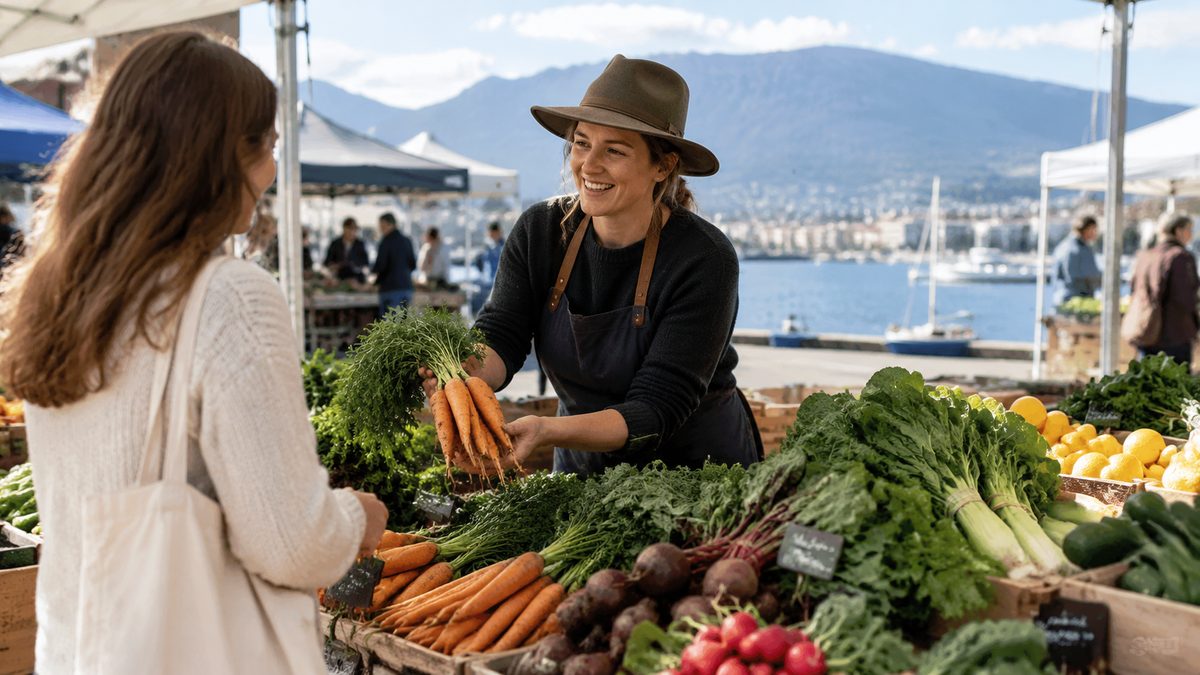
Farm Gate Market is Hobart’s Sunday market for buying fresh Tasmanian food directly from growers, makers and small producers. It is held in central Hobart and works best as an early food-shopping trip rather than a late sightseeing stop. Arrive with a bag, inspect the full market before buying, and let the season guide your choices.
This Farm Gate Market Hobart guide explains how to plan the visit, read the stalls and choose food with care. The focus is the direct connection between local producers and shoppers. For wider ideas on exploring the city, use The Hobart Field Guide.
What makes this market different from a standard grocery shop?
Farm Gate Market shortens the distance between the person producing food and the person eating it. Shoppers can ask who grew an apple, where eggs were laid or when bread came from the oven. That information is harder to find when food passes through a long retail system.
A supermarket aims to provide much the same range each week. A Farmers' market changes with weather, harvests and small production runs. Some stalls may sell out early. A vegetable that appears for several Sundays can vanish once its season ends. This changing range is part of the market’s value.
The term Farm gate marketing describes direct sales from a farm or producer to the public. Those sales can happen at a roadside shed, through a produce box or at a city market. Hobart’s market brings many producers to one central place, so shoppers can compare several farms without driving across southern Tasmania.
A shorter Supply chain can also make the path of a product easier to understand. It does not prove that every item is local, organic or harvested that morning. It gives shoppers a chance to ask. Good sellers can usually explain where their raw ingredients came from and how the product was made.
When should you arrive?
Sunday morning is the usual trading period, with the market commonly opening in the morning and finishing around early afternoon. Trading details can change for public events, road works or severe weather, so check the market’s current official notice before leaving.
Arrive near opening time if you want the widest choice of berries, mushrooms, bread or other goods made in small batches. Early shoppers also get more time to speak with producers before the lanes become busy. This matters when you need details about farming methods or allergens.
Arriving later can still suit a casual visit. The market may feel less rushed near closing time, but popular lines can be gone. Do not expect lower prices at the end. Producers set prices around the cost of growing, making and transporting food, and many will take unsold stock home or use it elsewhere.
Allow about an hour for a focused shop. Add more time if you plan to eat breakfast, compare several stalls or ask detailed questions. A tight schedule makes it easy to buy the first appealing item and miss a better fit further along.
How should you plan the trip into central Hobart?
Farm Gate Market operates on Bathurst Street in central Hobart. The market setup affects nearby vehicle access, while central parking can fill as Sunday activity builds. Check the current street closure area and parking signs when you arrive. Never rely on an old parking rule from a travel post.
Walking from central accommodation is often simple. If you drive, aim to park a few streets away rather than circling beside the stalls. That gives you a more reliable arrival and reduces traffic around people carrying food.
Bring a strong reusable bag for jars and firm produce. Use a separate soft bag for bread, herbs and ripe fruit. An insulated bag with a cold pack helps protect dairy, meat and seafood between the stall and your fridge. On a warm day, buy chilled goods near the end of the visit and take them straight home.
Card payments are common at markets, but equipment and mobile signals can fail. Carrying some cash gives you a backup. A small amount is enough because this is a food shop, not a reason to walk around with a large sum.
How can you tell what is genuinely local?
Start with one plain question: where was this grown or made? A clear answer should identify a farm, town or region. For a processed product, ask which main ingredients are Tasmanian. A jam made in Hobart from fruit grown elsewhere is locally made, but it is not wholly local produce.
Read signs with care. Words such as artisan, natural and farmhouse describe an image more than a regulated production standard. They do not tell you where ingredients came from. Specific details carry more weight, such as a named farm, a harvest week or the variety of apple used.
Season also provides a useful check. Tasmania’s cool climate shapes when produce is likely to appear. Fresh berries, stone fruit and tomatoes have different windows from winter roots or brassicas. Modern storage and protected growing can extend those windows, so unusual timing is a reason to ask, not proof of a false claim.
Honest answers may contain limits. A baker might use local flour when supply allows but source chocolate from overseas. A sauce maker might grow the chillies but buy vinegar. Clear sourcing is more useful than a broad claim with no detail.
Does organic always mean the same thing?
No. Organic farming can refer to certified production or to methods a grower describes as organic. Certification involves a defined standard and outside checks. A seller who says produce is grown without synthetic sprays may be describing one practice rather than certified organic status.
If certification matters to you, ask which certifying body covers the farm and look for the relevant mark. If your main concern is spray use, ask a narrower question: what was used on this crop during its current growing cycle? That can produce a clearer answer than asking whether everything is organic.
Small farms may follow low-input methods without paying for certification. That does not make their produce certified organic. It also does not make it poor food. The useful approach is to match the claim with evidence and decide which farming practices matter to your household.
What do egg and meat labels really tell you?
Terms around animal production can be confusing. Free-range eggs come from hens that have some access to outdoor areas under the rules applying to that production system. The label does not describe every part of a hen’s life, the size of the flock or the quality of the outdoor space.
The phrase Free range also appears on some meat products. Its meaning can vary by species, certification program and producer claim. Ask how animals are housed, how often they use pasture and whether an outside program checks the claim. A farmer who manages the animals should be able to explain the system in plain language.
Appearance is not a reliable test. A dark egg yolk can reflect feed rather than access to pasture. Meat colour can change with breed, age, diet and storage. Production details and safe handling matter more than a rustic look.
Keep raw animal products separate from ready-to-eat food in your bag. Chilled purchases should spend as little time as possible above safe refrigeration temperature. If you plan to keep exploring Hobart after the market, use an insulated container or delay buying these products.
How do you judge fruit, vegetables and pantry goods?
Buy produce for the way you will use it. Firm fruit may suit travel or eating later in the week. Ripe fruit may have better flavour today but can bruise on the walk home. Ask the grower when it will be ready rather than squeezing every piece.
Cosmetic marks are often harmless, but damage that breaks the skin can shorten storage life. Check the base of punnets for crushed berries or moisture. Look at leafy greens for crisp stems and signs of drying. Soil on roots can be normal and says little by itself about freshness.
For bread, ask when it was baked and how it should be stored. A crisp loaf often softens in plastic. A cut loaf may keep better wrapped or frozen in slices. Buy the size your household can finish rather than treating a large loaf as better value.
With honey, sauces and Fruit preserves, read the ingredient order. Ingredients appear by weight, which helps reveal whether fruit, sugar or another component forms most of the product. Check the best-before date, storage advice and refrigeration directions after opening.
Allergen questions need precise answers. Market food may be made in small shared kitchens. If an allergy could cause a serious reaction, ask about ingredients and cross-contact. Do not treat a missing warning on a handwritten sign as proof that a product is safe.
How can you build a useful market shop without overspending?
Set a meal plan before you arrive, but leave space for one seasonal find. This keeps the shop practical while allowing the market to guide you toward food that is abundant that week.
Walk the full market once before making large purchases. Note prices, pack sizes and ripeness. Two stalls can sell the same type of vegetable with different varieties or farming methods, so price alone does not show which offers better value.
Compare the edible amount, not the size of the package. A cheap large box becomes expensive if half spoils. Smaller households often save money by buying loose produce, splitting a box with friends or choosing food that can be frozen.
Ask how to use unfamiliar items. Growers often know whether a variety works best raw, roasted or stored. That advice can prevent waste. Keep in mind that suggestions are cooking guidance, not medical advice.
A simple budget method is to choose your main fresh food first and add treats only after you know what remains. Market pastries and drinks can consume money meant for produce before you reach the growers at the other end.
What mistakes weaken the experience?
- Shopping without checking the season: Expecting the same produce all year can lead you to miss what is at its best now.
- Treating every local claim as equal: Separate where a business is based from where its main ingredients were grown.
- Buying chilled food too early: Heat and a long walk can reduce food safety before you reach home.
- Blocking a stall while deciding: Step aside to read labels when the market is busy, then return with your question.
- Taking photographs without asking: A public market is still a workplace. Request permission before taking close images of sellers or customers.
- Assuming direct sales must be cheap: Small-scale food reflects labour, transport, packaging and seasonal risk. Judge value by quality, origin and how much you will use.
What should you do before your next visit?
- Check the official Sunday trading notice and any street changes.
- Write a short list based on the meals you will cook that week.
- Pack reusable bags, cold storage and a small cash backup.
- Ask each producer one clear question about origin or production before buying.
Arrive early, walk the whole market once, then buy the best seasonal food you can use before it spoils.
A farm gate market Hobart guide can help visitors explore seasonal produce and local food experiences across Derwent Valley, Tasmania, Huon Valley, and Coal River Valley.